Wednesday, 31 December 2008

Atari 7800: 3 x TOSEC Romset


"The Atari 7800 ProSystem, or simply the Atari 7800, is a video game console released by Atari Corporation in June 1986. A test market release had occurred two years earlier under Atari Inc. The 7800 was designed to replace Atari Inc.'s unsuccessful Atari 5200 and later to re-establish Atari Corp.'s market supremacy against Nintendo and Sega. With this system, Atari Inc. addressed all the shortcomings of the Atari 5200: it had simple digital joysticks; it was almost fully backward-compatible with the Atari 2600; and it was affordable (originally priced at US$140).


Choplifter!

The Atari 7800 ProSystem was the first game system from Atari Inc. designed by an outside company, General Computer Corporation (GCC). The system had been designed in 1983 and 1984 with an intended mass market rollout at the end of 1984. The project was originally called the 3600 and then later renamed the 7800.

Several key factors influenced the design of the 7800. First, Atari had been facing mounting pressure from the ColecoVision, which boasted graphics that more closely mirrored arcade games of the time than Atari’s reigning 2600 VCS system. Second, the Atari 5200 (the original intended successor to the Atari 2600 VCS) had been widely criticized for not being able to play Atari 2600 VCS games and for the poor quality of its analog joysticks. Finally, dropping prices of home computers like the Commodore 64 had caused many to believe that buying a home computer was a better investment because it provided more detailed game play and could be used for other purposes such as word processing.


F-18 Hornet

Previous game consoles sometimes had a difficult time replicating the arcade experience in home versions of popular arcade games. In particular, home versions of arcade games sometimes had problems with flickering and slow down when more than a few moving objects appeared on the screen at once. GCC, which had a background in creating arcade games, designed their new system with a graphical architecture similar to arcade machines of the time. The 7800 featured the ability to move around tremendous amount of objects (75-to-100) that far exceeded previous consoles. Powering the system was a 6502C processor running at 1.79 MHz, similar to the processor found in home computers (Atari 8-bit, Apple II, Commodore 64) and other consoles (Atari 5200 and Nintendo Entertainment System).


Pole Position II

In response to the criticisms of the Atari 5200, the Atari 7800 could play almost all Atari 2600 games out of the box, without the need for an adapter. In addition, it featured a return to a digital controller.

To address the concerns of parents that home computers were a better investment than consoles, the system was designed to be upgraded to a full-fledged home computer. A keyboard was developed, and the keyboard had an expansion port (which was the SIO port from Atari's 8-bit computer line, though the 7800 could not run Atari computer programs) allowed for the addition of peripherals such as disk drives and printers.


Super Huey UH-IX

To enhance the gaming experience further, GCC had also designed a 'high score cartridge,' a battery-backed RAM cart designed for storing game scores. On the side of the 7800 was an expansion port, reportedly for a planned connection with a laserdisc player." (Wikipedia)

Download from Megaupload:

Atari 7800 - Applications (TOSEC-v2005-10-05)
Atari 7800 - BIOS (TOSEC-v2006-05-05)
Atari 7800 - Games (TOSEC-v2005-10-05)


http://www.megaupload.com/?d=K3HW0GW0

Commodore 128: 8 x TOSEC Romset

"The Commodore 128 (C128, CBM 128, C=128) home/personal computer was the last 8-bit machine commercially released by Commodore Business Machines (CBM). Introduced in January of 1985 at the CES in Las Vegas, it appeared three years after its predecessor, the best selling Commodore 64. The primary hardware designer of the C128 was Bil Herd.

The C128 was a significantly expanded successor to the C64 and unlike the earlier Plus/4 it remained compatible. The new machine featured 128 KB of RAM (externally expandable to 640 KB) and an 80-column RGB monitor output (driven by the 8563 VDC chip with 16 KB dedicated video RAM, although following the release of the 128D later "flat" 128s had 64 KB of VRAM), as well as a redesigned case/keyboard with a numeric keypad. The 128's power supply was vastly improved over the 64's troublesome design.

It was much larger, with cooling vents and a fuse to protect it from blowing up. Instead of the 6510 CPU of the C64, the C128 incorporated a two-CPU design. The primary CPU, the 8502, was a slightly improved version of the 6510; its main addition was the ability to run at a 2 MHz clock rate (however, this required turning off the 40-column video output). The second CPU was a Zilog Z80 which was used for ensuring CP/M compatibility and for mode-selection of the computer upon boot-up. The two processors could not run concurrently, thus the C128 was not a multiprocessing system.


The Last V8

The C128 had three modes of operation: C128 Mode (native mode), which ran at 1 or 2 MHz with the 8502 CPU and had both 40- and 80-column text modes available; CP/M Mode, which used the Z80 second CPU in either 40- or 80-column text mode; and C64 Mode, which was very nearly 100% compatible with the earlier computer. None of these modes would have been possible as implemented on the C128 without the Z80 chip. The Z80 controls the bus on initial boot-up and checks to see if there are any C64/C128 cartridges present, and if the Commodore key (C64-mode selector) is active on boot-up. Based on what it finds, it will switch to the appropriate mode of operation.

Some 128s suffered from a reliability problem caused by the electromagnetic shield over the internal board. The shield had fingers that rested on the top of the major chips to conduct heat into the shield which then acted as a large heatsink. A combination of poor contact and the fact that plastic encased chips do not lose heat that way plus the shield being made from mu-metal (a poor heat conductor) saw some chips overheat and fail. The SID sound chip was particularly vulnerable in this respect as it operated from a 9 volt supply. The situation could be vastly improved by removing the shield completely." (Wikipedia)

Download from Megaupload:

Commodore C128 - Applications (TOSEC-v2005-07-31)
Commodore C128 - Demos (TOSEC-v2005-07-31)
Commodore C128 - Games - [D64] (TOSEC-v2006-03-06)
Commodore C128 - Games - [D81] (TOSEC-v2005-07-31)
Commodore C128 - Games - [LNX] (TOSEC-v2005-07-31)
Commodore C128 - Games - [PRG] (TOSEC-v2005-07-31)
Commodore C128 - Magazines - [D64] (TOSEC-v2005-07-31)
Commodore C128 - Magazines - [TAP] (TOSEC-v2006-03-06)


http://www.megaupload.com/?d=GCR0IM5L

Tuesday, 30 December 2008

Atari 2600 & VCS: 5 x TOSEC

"The Atari 2600 is a video game console released in October 1977. It is credited with popularizing the use of microprocessor based hardware and cartridges containing game code, instead of having non-microprocessor dedicated hardware with all games built in. The first game console to use this format was the Fairchild Channel F. However, it was the Atari 2600 that made the plug-in concept popular among the game-playing public.


Air-Sea Battle

Originally known as the Atari VCS—for Video Computer System—the machine's name was changed to "Atari 2600" (from the unit's Atari part number, CX2600) in 1982, after the release of the more advanced Atari 5200. The 2600 was typically bundled with two joystick controllers, a conjoined pair of paddle controllers, and a cartridge game—initially Combat and subsequently Pac-Man.


Pac-Man

The Atari 2600 was wildly successful, and during the 1980s, "Atari" was a synonym for this model in mainstream media and, by extension, for video games in general, similar to "Nintendo" and "PlayStation" in the later 1980s and 1990s." (Wikipedia)

Download from Megaupload:

Atari 2600 & VCS - Games (TOSEC-v2006-05-25)

http://www.megaupload.com/?d=CB2CT1ZE

Atari 2600 & VCS - Applications (TOSEC-v2006-05-25)

http://www.megaupload.com/?d=TG66SI66

Atari 2600 & VCS - Audio (TOSEC-v2006-01-29)

http://www.megaupload.com/?d=C67HMQ5E

Atari 2600 & VCS - Demos (TOSEC-v2006-05-25)

http://www.megaupload.com/?d=CZ832LAN

Atari 2600 & VCS - Educational (TOSEC-v2006-05-25)

http://www.megaupload.com/?d=MM7S9UPH

Retro Scan: "Sonic The Hedgehog Super Sonic Jackpot"


Sonic The Hedgehog Super Sonic Jackpot

Apple Lisa - Applications (TOSEC-v2006-03-18)


"The Apple Lisa was a personal computer designed at Apple Computer, Inc. during the early 1980s.

The Lisa project was started at Apple in 1978 and evolved into a project to design a powerful personal computer with a graphical user interface (GUI) that would be targeted toward business customers.


Around 1982, Steve Jobs was forced out of the Lisa project, so he joined the Macintosh project instead. Contrary to popular belief, the Macintosh is not a direct descendant of Lisa, although there are obvious similarities between the systems and the final revision, the Lisa 2/10, was modified and sold as the Macintosh XL.

The Lisa was a more advanced (and far more expensive) system than the Macintosh of that time in many respects, such as its inclusion of protected memory, cooperative multitasking, a generally more sophisticated hard disk based operating system, a built-in screen saver, an advanced calculator with a paper tape and RPN, support for up to 2 megabytes of RAM, expansion slots, and a larger higher resolution display.


It would be many years before many of those features were implemented on the Macintosh platform. Protected memory, for instance, did not arrive until the Mac OS X operating system was released in 2001. The Macintosh, however, featured a faster 68000 processor (7.89 MHz) and sound." (Wikipedia)

Download Apple Lisa - Applications (TOSEC-v2006-03-18) from Megaupload:

http://www.megaupload.com/?d=TR6I5LVS

Monday, 29 December 2008

Infocom Z-Machine - Games (TOSEC-v2006-05-09)


"The Z-machine is a virtual machine that was developed by Joel Berez and Marc Blank in 1979 and used by Infocom for its text adventure games. Infocom compiled game code to files containing Z-machine instructions (called story files, or Z-codefiles), and could therefore port all its text adventures to a new platform simply by writing a Z-machine implementation for that platform. With the large number of incompatible home computer systems in use at the time, this was an important advantage over using native code (or developing some compiler for each system).

The "Z" of Z-machine stands for Zork, Infocom's first adventure game. Z-code files usually have names ending in .z1, .z2, .z3, .z4, .z5, .z6, .z7 or .z8, where the number is the version number of the Z-machine on which the file is intended to be run, as given by the first byte of the story file. This is a modern convention, however. Infocom itself used extensions of .dat (Data) and .zip (ZIP = Z-machine Interpreter Program), but the latter clashes with the present widespread use of .zip for PKZIP-compatible archive files (which did not exist yet during the time Infocom was active). Infocom produced six versions of the Z-machine. Files using versions 1 and 2 are very rare. Only two version 1 files are known to have been released by Infocom, and only two of version 2. Version 3 covers the vast majority of Infocom's released games. The later versions had more capabilities, culminating in some graphic support in version 6.

The compiler (called Zilch) which Infocom used to produce its story files has never been released, although documentation of the language used (called ZIL, for Zork Implementation Language) still exists. But in May 1993, Graham Nelson released the first version of his Inform compiler, which also generates Z-machine story files as its output, even though the Inform source language is quite different from ZIL. Most files produced by Inform are version 5.

Inform has since become very popular in the interactive fiction community and, as a consequence, a large proportion of the interactive fiction now produced is in the form of Z-machine story files. Demand for the ability to create larger game files led Graham Nelson to specify versions 7 and 8 of the Z-machine, though version 7 is very rarely used. Because of the way addresses are handled, a version 3 story file can be up to 128K in length, a version 5 story can be up to 256K in length, and a version 8 story can be up to 512k in length. Though these sizes may seem small by today's computing standards, for text-only adventures, these are large enough for very elaborate games.

During the 1990s, Graham Nelson drew up a Z-machine standard, based on detailed studies of the existing Infocom files.

Interpreters

Interpreters for Z-code files are available on such a wide variety of platforms - for example, on various old machines (such as the Apple II, TRS-80 and Sinclair), portable machines (such as Palm OS devices and the Nintendo Game Boy) and most modern platforms, showing that it is a very portable language.

Popular interpreters include Nitfol and Frotz. Nitfol makes use of the Glk API, and supports versions 1 through 8 of the Z-machine, including the version 6 graphical Z-machine. Save files are stored in the standard Quetzal save format. Binary files are currently available for several different operating systems, including Macintosh, Linux, MS-DOS, and Windows.

Frotz

Frotz is a Z-machine implementation: an adventure game engine for playing the Infocom's text adventures, as well as more recent games released by others.

Frotz is perhaps the most well-known and popular Z-machine implementation available. Its advantages over other Z-machine interpreters are twofold: firstly, though it was not the first non-Infocom interpreter to be released, it was one of the early ones -- its initial release by Stefan Jokisch was in 1995. Secondly, because the program is written in highly portable C, it has been possible to port the original DOS version to most modern computer formats, including not only Unix and Windows but even palmtops and mobile phones. Various extensions have since been added, such as sound effects and graphics.

In 2002, the Frotz core codebase was picked up by David Griffith, who continues to develop it. The codebase was then distinctly split between the virtual machine and the user interface portions such that the virtual machine became entirely independent from any user interface. This allowed some clever programmers to create some of the stranger ports of Frotz. One of the strangest is also one of the simplest: an instant messenger bot is wrapped around a version of Frotz with the bare minimum of IO functionality creating a bot with which one can play most Z-machine games using an instant messenger." (Wikipedia)

Visit this website for a list of recommended interpreters.

Download Infocom Z-Machine - Games (TOSEC-v2006-05-09) from Megaupload:

http://www.megaupload.com/?d=0GBV1FC0

Thursday, 25 December 2008

Casio CFX9850-9950 - Various (TOSEC-v2006-05-09)

Casio Calculator"Graphic calculators made by Casio include the touchscreen Classpad 300 as well as the models with traditional buttons which can be divided into two main generations listed below. Casio is credited with the making of the first graphing calculator, the fx-7000G.

Compared to the first generation models these have many more commands including: For and While Loops, If.. Then structures and the ability for real-time user interaction with the Getkey command and the ability to place characters anywhere on the screen with the Locate and Text commands. Also the method for using array variables was changed to using lists and matrices.

9850 series
First made in the year 1996, there have been numerous variations of the CFX-9850G. The 9850 series models have 3-colour screens apart from the fx-9750G which is black and white. The 9950G has 64k memory compared to the 32k of the original 9850G. The 9970G has symbolic algebra. Later versions such as Ga, GB and GC models fixed some bugs from the original G model and added some stats and finance features. The GB models have a built-in software library.
(French versions: 9750=Graph 30,35,fx-8930GT; 9850,9950=Graph 60,65,CFX-9930GT,9940,9960; 9970=Graph 80)" (Wikipedia)


Download Casio CFX9850-9950 - Various (TOSEC-v2006-05-09) from Megaupload:

http://www.megaupload.com/?d=ZAEHCHA1

Tuesday, 23 December 2008

Atari 8-bit 13 x TOSEC


I think this is the last upload before Christmas. I'm getting too busy with other things to provide a quality uploads now, so enjoy this one! I've got my first Atari for Christmas so it's good time to give you 13 TOSEC romsets full of Atari stuff.

Marry Christmas!!!

Download:

Atari 8bit - Applications - [ATR] (TOSEC-v2006-03-29)
Atari 8bit - Applications - [BIN] (TOSEC-v2006-03-29)


http://www.megaupload.com/?d=QYWT1IJE

Atari 8bit - Demos - [ATR] (TOSEC-v2006-03-29)
Atari 8bit - Demos - [COM] (TOSEC-v2006-03-29)


http://www.megaupload.com/?d=4L9ZWDZ9

Atari 8bit - Games - [ATR] (TOSEC-v2006-03-29)
Atari 8bit - Games - [BIN] (TOSEC-v2006-03-29)
Atari 8bit - Games - [CAS] (TOSEC-v2006-03-29)
Atari 8bit - Games - [XEX] (TOSEC-v2006-03-29)


http://www.megaupload.com/?d=P73N95AB
http://www.megaupload.com/?d=9O11ZVXI


Atari 8bit - Magazines - [ATR] (TOSEC-v2006-03-29)

http://www.megaupload.com/?d=2HKVI1IG

Atari 8bit - Operating Systems (TOSEC-v2006-03-29)

http://www.megaupload.com/?d=U7JFW56W

UPDATE - Two missing TOSEC romsets:

Atari 8bit - Applications - [CAS] (TOSEC-v2006-03-29)
Atari 8bit - Applications - [COM] (TOSEC-v2006-03-29)


http://www.megaupload.com/?d=K51CZCHE

Casio PB-1000 - Various (TOSEC-v2005-08-26)


The Casio PB-1000 was a hand-held computer released by Casio in 1987. Revolutionary for its time, it featured a touchscreen display which consisted of 16 keys built into the screen, arranged in fixed positions on a four by four matrix.

The computer itself included 8Kb of RAM and it was possible to install a 32Kb memory expansion card.

The PB-1000 was programmable in both a custom version of the BASIC language and assembly language.

Download Casio PB-1000 - Various (TOSEC-v2005-08-26) from Megaupload:

http://www.megaupload.com/?d=82Z0WQJQ

Acorn Archimedes 3 x TOSEC


"The Acorn Archimedes was Acorn Computers Ltd's first general purpose home computer based on their own 32-bit ARM RISC CPU. The name is also commonly used to describe computers which were based on the same architecture, even where Acorn did not include 'Archimedes' in the official name." (Wikipedia)

Download:

Acorn Archimedes - Applications (TOSEC-v2006-02-20)
Acorn Archimedes - Demos (TOSEC-v2006-02-20)
Acorn Archimedes - Games (TOSEC-v2006-02-20)


http://www.megaupload.com/?d=I0GJ2QFR

Acorn Electron 3 x TOSEC


"The Acorn Electron is a budget version of the BBC Micro educational/home computer made by Acorn Computers Ltd. It has 32 kilobytes of RAM, and its ROM includes BBC BASIC along with its operating system.

The Electron was able to save and load programs onto audio cassette via a supplied converter cable that connected it to any standard tape recorder that had the correct sockets. It was capable of basic graphics, and could display onto either a television set, a colour (RGB) monitor or a "green screen" monitor.

At its peak, the Electron was the third best selling micro in the United Kingdom, and total lifetime game sales for the Electron exceeded those of the BBC Micro. There are at least 500 known games for the Electron and the true total is probably in the thousands.

The hardware of the BBC Micro was emulated by a single customized ULA chip designed by Acorn. It had feature limitations such as being unable to output more than one channel of sound where the BBC was capable of three-way polyphony (plus one noise channel) and the inability to provide teletext mode. The machine architecture also imposed a substantial speed decrease on applications running from RAM, although ROM applications ran at the same speed

The ULA controlled memory access and was able to provide 32K × 8 bits of addressable RAM using 4 × 64K × 1-bit RAM chips (4164)." (Wikipedia)

Download from Megaupload:

Acorn Electron - Covertapes (TOSEC-v2004-06-14)
Acorn Electron - Games - [SSD] (TOSEC-v2006-03-28)
Acorn Electron - Games - [UEF] (TOSEC-v2006-03-28)


http://www.megaupload.com/?d=8X252974

Apple IIGS - Various (TOSEC-v2006-05-09)

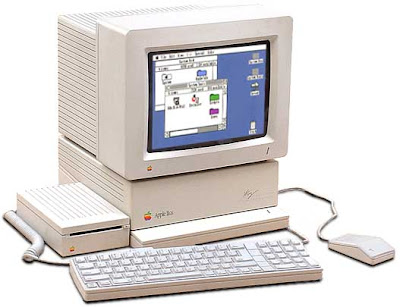
Apple II GS

"The Apple IIgs, the fifth model inception of the Apple II, was the most powerful member of the Apple II series of personal computers made by Apple Computer. At the time of its release, it was capable of advanced color graphics and then-state-of-the-art sound synthesis that surpassed those of most other computers, including the black and white Macintosh (apart from a lower vertical resolution). "GS" referred to its enhanced graphics and sound capabilities, which greatly surpassed previous models of the line.


Impossible Mission II

The machine was a radical departure from any previous Apple II, with its true 16-bit architecture, increased processing speed, direct access to megabytes of RAM, wavetable music synthesizer, graphical user interface, and mouse. While still maintaining full backwards compatibility with earlier Apple II models, it blended the Apple II and aspects of Macintosh technology into one. The Apple IIgs set forth a promising future and evolutionary advancement of the Apple II line, but Apple paid it relatively little attention as the company increasingly focused on the Macintosh platform.


Roberta Williams' Mixed-Up Mother Goose

The Apple IIgs was the first computer produced by Apple to use a color graphical user interface, as well as the "Platinum" (light grey) color scheme and the Apple Desktop Bus interface for keyboards, mice, and other input devices. It was also the first personal computer to come with a built-in "wavetable" sample-based synthesizer chip, utilizing technology from Ensoniq. The machine outsold all other Apple products, including the Macintosh, during its first year in production." (Wikipedia)

Download Apple IIGS - Various (TOSEC-v2006-05-09) from Megaupload:

http://www.megaupload.com/?d=06TN7TFE
http://www.megaupload.com/?d=CD2II11P

Monday, 22 December 2008

Commodore - Plus-4 No-Intro 20090105 Romset

Commodore +4
"The Commodore Plus/4 was a home computer released by Commodore International in 1984. The "Plus/4" name refers to the four-application ROM resident office suite (word processor, spreadsheet, database, and graphing); it was billed as "the productivity computer with software built-in". It had some success in Eastern Europe, but was less popular in Western Europe. A total flop in the United States, it was derided as the "Minus/60"—a pun on the difference between the Plus/4 and the dominant Commodore 64." (Wikipedia)

Download Commodore - Plus-4 No-Intro 20090105 Romset from Megaupload:

http://www.megaupload.com/?d=8QWMTS1D

Due to broken link the original set has been replaced with the latest one.

Sunday, 21 December 2008

Amstrad CPC - 7 x TOSEC Romsets.

"The Amstrad CPC is a series of 8-bit home computers produced by Amstrad during the 1980s and early 1990s. "CPC" stands for 'Colour Personal Computer', although it was possible to purchase a CPC with a green screen (GT64/65) as well as with the standard colour screen (CTM640/644).

Budokan: The Martial Spirit

The first machine, the CPC 464, introduced in 1984, was designed as a direct competitor to the Commodore 64 and Sinclair ZX Spectrum systems. Packaged as a "complete system" the CPC 464 came with its own monitor and built-in cassette tape deck. The CPC 664, with its own built-in floppy disk drive, arrived early in 1985, to be replaced itself later that same year by the CPC 6128. In 1990, Amstrad launched the CPC 464 and 6128 Plus range featuring tweaked hardware from the old CPC range.

Dizzy: Prince of the Yolkfolk

The original CPC range was successful, especially in Europe, with three million units sold. Following this, Amstrad launched the Amstrad PCW word-processor range, which sold eight million units. Variations and clones of the CPC range were also released in Germany. The Plus range failed to find a market amongst the higher spec 16-bit Atari ST and Commodore Amiga systems." (Wikipedia)


Download from Megaupload:

Amstrad CPC - Applications (TOSEC-v2007-01-01)

http://www.megaupload.com/?d=EN4NYRRU

Amstrad CPC - Compilations (TOSEC-v2007-01-01)

http://www.megaupload.com/?d=FIOBNXFI

Amstrad CPC - Demos (TOSEC-v2007-01-01)

http://www.megaupload.com/?d=48CZKRRO

Amstrad CPC - Games - [CPR] (TOSEC-v2007-01-01)
Amstrad CPC - Games - [DSK] (TOSEC-v2007-01-01)

http://www.megaupload.com/?d=0Q4UU4WR
http://www.megaupload.com/?d=9I81VKIN


Amstrad CPC - Public Domain (TOSEC-v2005-01-19)

http://www.megaupload.com/?d=B1CS6OR2

Amstrad CPC - Utilities (TOSEC-v2007-01-01)

http://www.megaupload.com/?d=SE7NO9X6

Saturday, 20 December 2008

TESLA PMD-85 - Various (TOSEC-v2005-04-06)

Tesla

"The PMD 85 was a personal computer produced from 1985 by the companies Tesla Piešťany and Bratislava in the former Czechoslovakia.

They were deployed en masse in schools throughout Slovakia, while the IQ 151 performed a similar role in Czech part of the country.

PMD 85s were famous for their overheating problems, and were jokingly referred to as "coffee machines".

This computer was produced locally due to a lack of foreign currency with which to buy systems from the West[citation needed]. After the fall of socialism in 1989, production of the PMD 85 was stopped. PMD 85 was not competitive in quality or features compared to foreign PCs available at that time." (Wikipedia)

Download TESLA PMD-85 - Various (TOSEC-v2005-04-06) from Megaupload:

http://www.megaupload.com/?d=EXZ16IU8